 Frame Rate Files
My best raid in Arclight Divide lasted four minutes and I did not fire a shot. I dropped into the flooded substation, heard a firefight two buildings east, went the other way, filled a bag with medical supplies from a room I had scouted on a previous run, and walked out of the north gate while the shooting was still going on. That run made more money than the previous six combined, and it is the clearest illustration of what this game gets right: the pressure is entirely spatial, and violence is only one of several available answers.
Ninety-six hours later I am confident this is the strongest raid design the genre has produced. I am equally confident that most people who buy it will stop somewhere around hour twelve, because the systems wrapped around those raids are actively hostile to anyone playing casually. Both things are true, and the score reflects the gap between them.
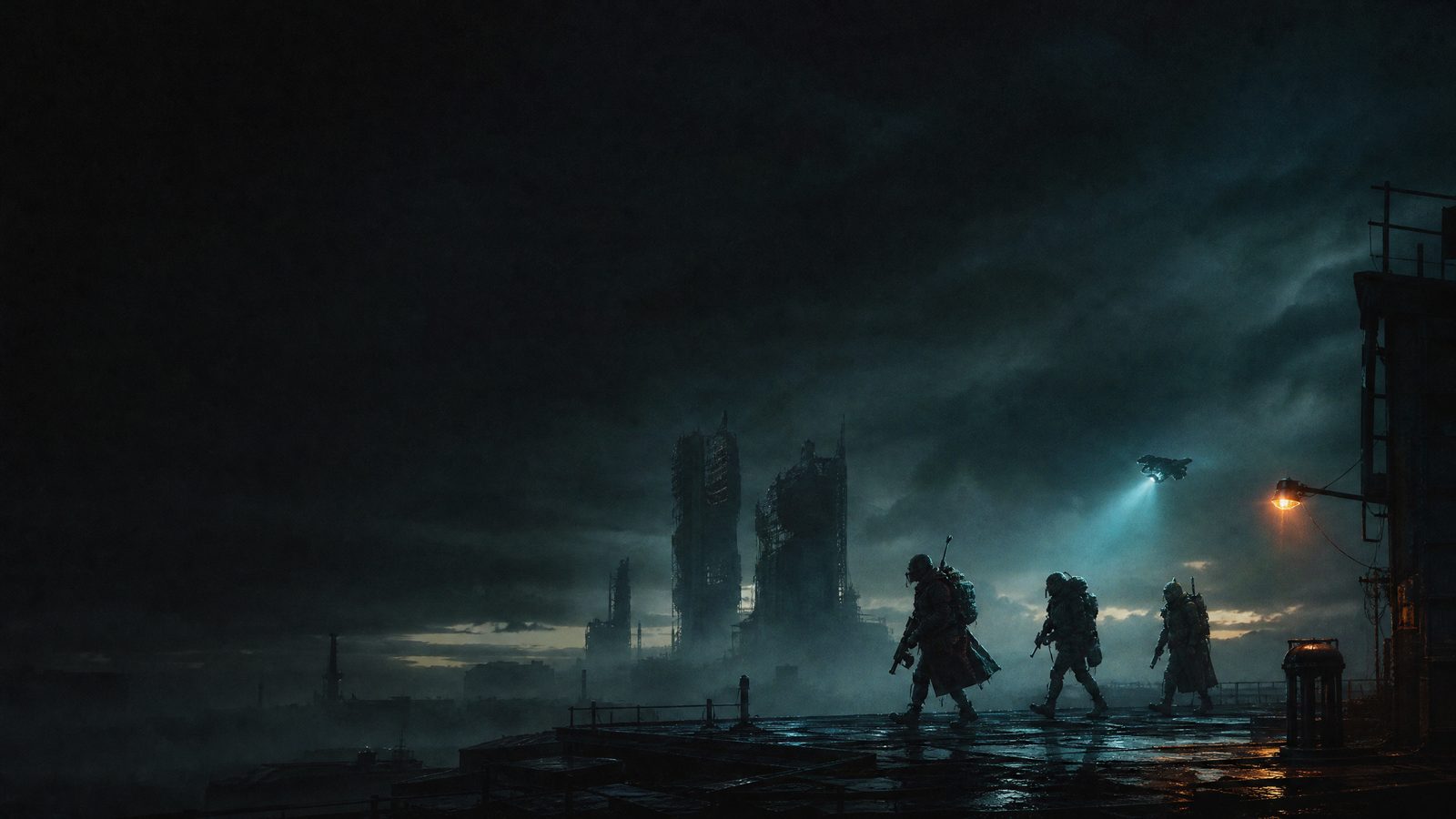
Why the maps are the achievement
There are six maps and each one is built around a legibility principle that the genre usually ignores: from any elevated position you can identify at least two extraction points and infer where other players will be moving. This sounds like a small thing. In practice it converts every raid from a lottery into a readable situation.
Sound design carries most of the load. Footstep occlusion is accurate enough that I could distinguish a player above me from a player behind a wall by hour six, and the game never cheats by muting an approach for dramatic effect. Combined with a lighting system where a torch genuinely gives away your position across two hundred metres, the result is a shooter where the most valuable skill is information management rather than aim.
The most tense forty seconds I have had in a multiplayer game this year involved crouching in a stairwell listening to two other squads negotiate over voice chat about whether to check it. They did not. I still think about it.
What the map design gets specifically right
- Extraction visibility. You can always see at least two exits from high ground, which makes route planning a real decision instead of a guess.
- Loot geography. High-value rooms are placed in high-risk positions with no exceptions, so a greedy run is always a legible trade.
- Honest audio. No arbitrary sound cut-offs and no scripted silence. What you hear is what is happening.
- Vertical shortcuts. Every map has three or four traversal routes that only exist if you have learned the geometry, and none of them are marked.
The progression curve is the problem
Here is where the game loses half a point and most of its potential audience. Gear tiers are gated behind trader reputation, reputation is earned through repeated task completion, and the tasks are built around raid counts rather than raid outcomes. The mathematics of that arrangement are brutal for anyone who plays three hours a week: you will be facing players in tier-four armour while still unlocking tier two, not because you are worse, but because they have run more raids.
The insurance system partially mitigates this, and the change in 0.14.3 to refund a percentage of lost gear on a failed extraction was a genuine improvement. It is still an economy designed with the assumption that the player is grinding, and it drags what should be a tense skill-based shooter toward being a time-investment ladder.
| Progression stage | Raids required | Real-time estimate |
|---|---|---|
| Tier 2 gear access | ~28 raids | 9 to 12 hours |
| Tier 3 gear access | ~74 raids | 26 to 32 hours |
| Tier 4 gear access | ~160 raids | 58 to 70 hours |
| Full trader unlock | ~240 raids | 90 hours plus |
Those figures come from our own logs across four wipes, timed rather than estimated. The important number is the last one: a full unlock is roughly a hundred hours, and every wipe resets it. If that sounds like a commitment rather than a game, this is not the title for you, and no amount of excellent map design will change that.
Technical performance
Better than the genre's reputation would suggest, with one significant caveat around the first minute of every raid.
| Configuration | Settings | Result |
|---|---|---|
| Current mid-range, 1440p | High, upscaling on | Stable 100 to 115; drops to 78 in the dockyard rain |
| Six-year-old build, 1080p | Medium, shadows low | 62 to 74; playable, with a hitch on first enemy contact |
| Both configurations | Any | Ten to twenty seconds of streaming stutter after each raid load |
Three disconnects in ninety-six hours, two of which cost gear that insurance later returned. Server tick rate is high enough that trades are rare, which matters enormously in a game where a single exchange decides a forty-minute run.
The wipe question
Four wipes in, my honest position is that wipes make this game better and also make it impossible to recommend to most people. Starting again is genuinely enjoyable when you know the maps — the first ten raids of a fresh cycle are the most tense the game ever gets, because everyone is poor and desperate. But it also means the hundred hours you invested are gone, and there is no version of that which works for a player with limited time.
Who should buy it
If you can play four or more evenings a week and you want the deepest raid design in the genre, buy it now and expect to be bad at it for two weeks. If you play in short irregular sessions, wait for the promised progression rework, because right now the game will hand you to better-equipped players repeatedly and call it a difficulty curve. Nothing about the shooting or the maps is at fault. The economy simply has a specific player in mind, and it is not a patient one.